Successful difficult conversations

Author: Sonia Gill

Feeling like things have gone a bit wobbly lately? Maybe your team isn’t clicking quite as well as they were before half-term? Staff are a bit more tired, a bit more tense. Behaviour feels trickier. Parents are knocking a little louder. It can feel like the wheels are starting to come loose — but there’s a reason this happens every year around now.
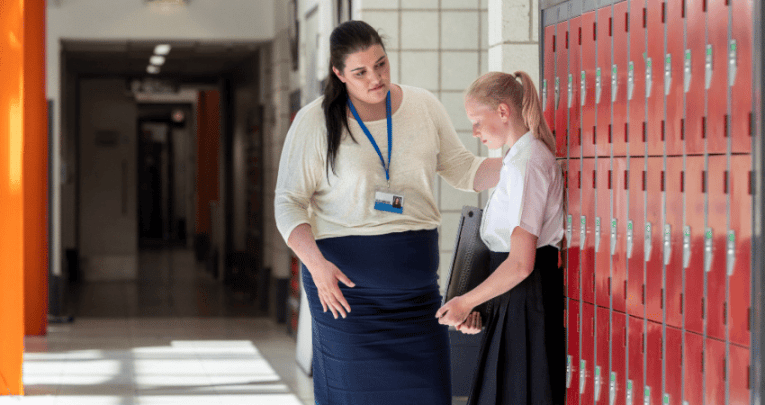
Every headteacher knows that parent. The one who keeps coming back. Again. And again. You do your best to help, but it never feels resolved. You might even feel your stomach sink when you see them approaching. In this week’s short video, I share a simple framework that keeps you in control.
Looking back over this half-term, you might feel like you’ve been dealing with one parent issue after another. It can feel like every parent has a problem. Or that too many parents are frustrated with what the school is doing.
Every so often, a school’s success story makes you smile all day — and this is one of them. Our Lady of Lourdes RC Primary School in Wanstead has been graded Outstanding in every area.
What I’ve noticed from over a decade of working with high-performing, fantastic schools: Without reflection, schools drift. With it, they grow. Reflection isn’t sitting around staring at your shoes. And you’ve definitely had it before. Maybe on a train journey to a conference, where the conversation flows there and back. Or on a precious SLT away day, where the fog lifts and you leave buzzing with ideas. And at some point you’ve said: “We should do this more often.”
Some parent conversations are hard work. Some are draining. And some… are wins. Here’s a simple leadership habit: Make space to share “What worked.”
In education, the word “outstanding” has long been tied to Ofsted — once a single judgement, now a set of gradings across areas, with a new scorecard soon to come. But beyond frameworks and metrics, when we talk about being Outstanding Against the Odds, we mean something deeper. It’s not about flawless performance or ticking every box for inspection. It’s about thriving for your children, even in circumstances that make excellence very hard to achieve. And schools are doing it — right now.
Your Home-School Agreement is one of the most under-used tools for managing parental relationships. Most of the time, it goes like this: A child joins the school, parents are given a copy, they sign it… and it disappears into a folder. Rarely looked at. Rarely remembered. Which is a shame — because if it’s done well, it can head off many of the parental issues you’re facing.
Some issues become niggles that drag on. You know the ones I mean: A parent is unhappy about a decision — their daughter should have been picked for the team. A parent insists their son would never behave that way — maybe not at home, but he does at school. A carer says their child is being picked on and the perpetrator must be moved to another class. Now!
Ever felt like you’re walking on eggshells with a parent? Maybe they storm in. Raise their voice. Question your judgement. Or drop a comment that sticks in your head for days. Other times, they’re less direct, but you still leave the conversation second-guessing every word.