
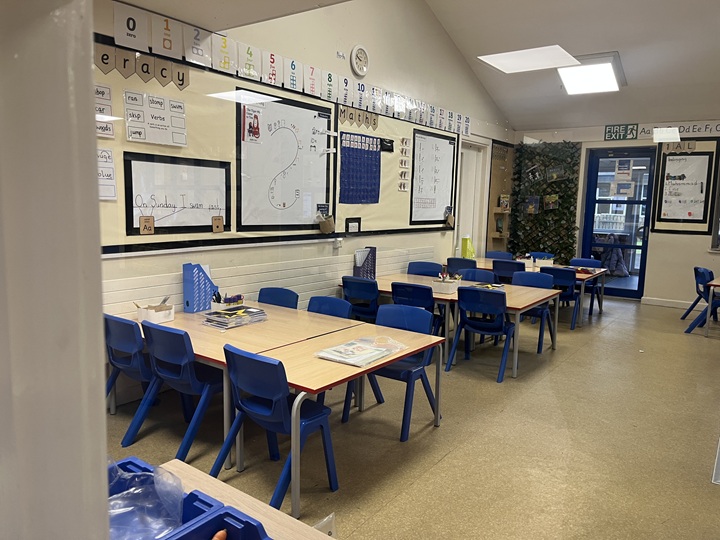
You can tell a lot about behaviour from an empty classroom.
No children.
No adults.
Just the room.
Chairs tucked in — or left out.
Books neat — or scattered.
Trays organised — or half open.
Lids on glue sticks — or missing.
No one has said a word.
But the room has.
It shows what’s expected.
What’s tolerated.
What’s normal here.
And this is the bit I think we sometimes miss.
We’ll spend hours rewriting behaviour policies.
We’ll debate sanctions.
We’ll run training sessions.
But not everyone insists that chairs are tucked in.
That coats are on pegs.
That clutter is cleared.
I know you do.
You always have.
But does everyone in your school?
Environment is behaviour made visible.
It reflects consistency.
Not what we say.
What we reinforce.
And children notice.
They notice what gets picked up.
What gets ignored.
What gets reset.
That’s how expectations are learned.
Not in assemblies.
In the everyday.
So here’s something simple to try this week:
Walk into a classroom at the end of the day.
No children.
No staff.
Just the room.
Ask yourself:
- What does this space say about behaviour in this class?
- Write down what you see — not what you expect.
- Then pick just one thing to tighten.
One.
Start there.
This isn’t about perfection.
It’s about consistency.
And consistency is what shifts behaviour.
If this made you think of your behaviour lead or your teachers, forward it to them.
Seeing this together can be really powerful.
Here’s to making expectations visible,
Sonia 💛
P.S. If these weekly ideas are helpful, you can share them with your team here: https://ukheadsup.com/weeklytips/